

Application
How Brushless Motors Enable Product Upgrades to the High-End Market: Key Insights from Design to Positioning
2025-12-16
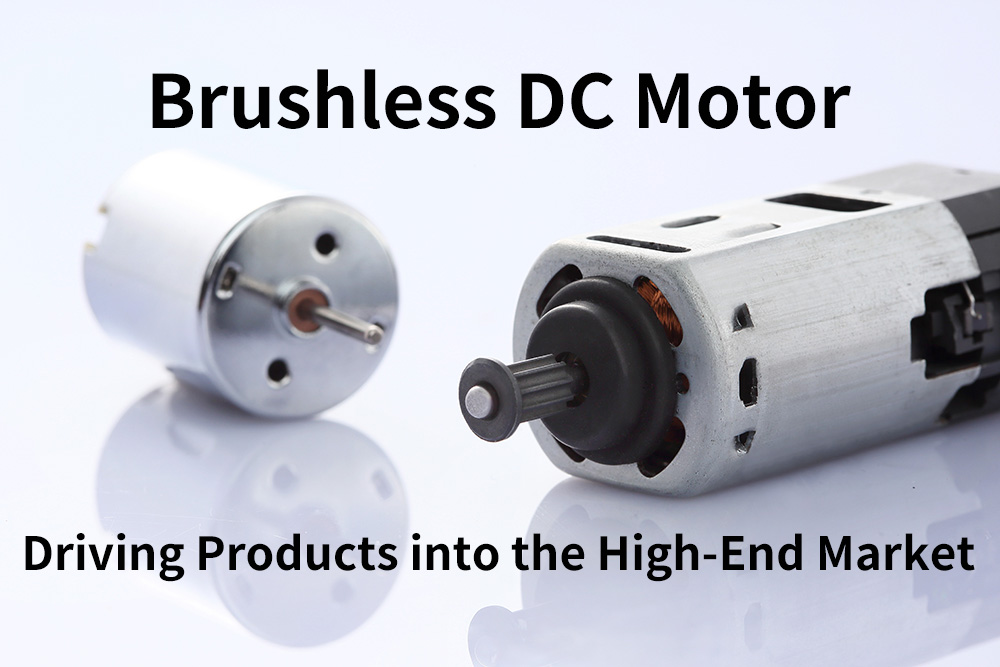
As market expectations for product quality and user experience continue to rise, more and more brands are rethinking how to move beyond price-driven products toward higher-end offerings with clear differentiation and added value.
Among various product upgrade strategies, motor selection often has the greatest impact, yet it is also one of the most underestimated factors.
Upgrading from traditional brushed motors to brushless motors is not simply a component replacement, but a key decision that influences overall product positioning, functional design, and market strategy.
Among various product upgrade strategies, motor selection often has the greatest impact, yet it is also one of the most underestimated factors.
Upgrading from traditional brushed motors to brushless motors is not simply a component replacement, but a key decision that influences overall product positioning, functional design, and market strategy.
How Brushless Motors Enable Products to Move into the High-End Market
Drawing from real-world product upgrade experience, this article explains how brushless motors reshape user experience and market positioning, and analyzes the common challenges and practical approaches involved in the upgrade process.
From Brushed to Brushless: A Clear Difference in Product Experience
In many home appliances and consumer products, brushed motors have long been widely adopted due to their low cost and simple structure.
However, as usage scenarios and market expectations evolve, their limitations have gradually become more apparent.
However, as usage scenarios and market expectations evolve, their limitations have gradually become more apparent.
・Prone to overheating during long-term operation, affecting stability
・Noticeable noise and vibration, reducing user comfort
・High maintenance frequency, increasing after-sales costs
・Noticeable noise and vibration, reducing user comfort
・High maintenance frequency, increasing after-sales costs
In contrast, brushless motors deliver significant improvements in efficiency, operational stability, and durability, creating a clearly higher-tier experience in real-world applications.
Brushless Motors Deliver More Than Performance — They Redefine Product Positioning
When a product transitions from a brushed motor to a brushless motor, the change goes far beyond internal structure.
More stable output and quieter operation enable advanced control functions and additional features, which form the core foundation of high-end and brand-oriented products.
More stable output and quieter operation enable advanced control functions and additional features, which form the core foundation of high-end and brand-oriented products.
Three Common Challenges When Upgrading to Brushless Motors
In practical implementation, upgrading products to brushless motors often involves several key challenges. These challenges are not only technical in nature, but also closely related to product strategy and team experience.
The first challenge is the shift in cost structure. Brushless motors typically have a higher initial cost than brushed motors, but the true focus of the upgrade lies not in reducing cost, but in successfully creating added product value.
The first challenge is the shift in cost structure. Brushless motors typically have a higher initial cost than brushed motors, but the true focus of the upgrade lies not in reducing cost, but in successfully creating added product value.
The second challenge is the complexity of control and system integration. Brushless motors require controllers and driving logic, demanding stronger system integration capabilities in the early design stage.
The third challenge is the learning curve. Without a clear upgrade roadmap and accumulated experience, development time and trial-and-error costs can increase significantly.
Phased Upgrades to Reduce Risk and Accelerate Product Growth
In practice, upgrading to brushless motors does not need to happen all at once.
Through phased design and modular planning, teams can gradually accumulate experience while effectively managing risk.
Through phased design and modular planning, teams can gradually accumulate experience while effectively managing risk.
・Introduce brushless motors first in high-end product models
・Maintain existing product lines while gradually expanding applications
・Transform technical upgrades into clear product differentiation
・Maintain existing product lines while gradually expanding applications
・Transform technical upgrades into clear product differentiation
Conclusion
The value of brushless motors lies not only in improved efficiency and extended service life, but also in their ability to support products in entering higher-level markets and more competitive segments.
For companies seeking to enhance product value and strengthen brand positioning, brushless motors represent a core technology worth planning for early on.
For companies seeking to enhance product value and strengthen brand positioning, brushless motors represent a core technology worth planning for early on.
Further Reading: What Challenges Will You Face When Transitioning to Brushless Motors? A Comic-Style Guide for First-Time Learners 
Need more replacement model options or customized motor solutions?
Provide your application details, size limitations, required output torque/gear ratio, and annual production volume. Our team will assess the optimal design configuration and project schedule for your needs.
