

Application
What Is a Brushless Motor? Key Differences and Applications of Brushed vs. Brushless Motors
2025-12-16
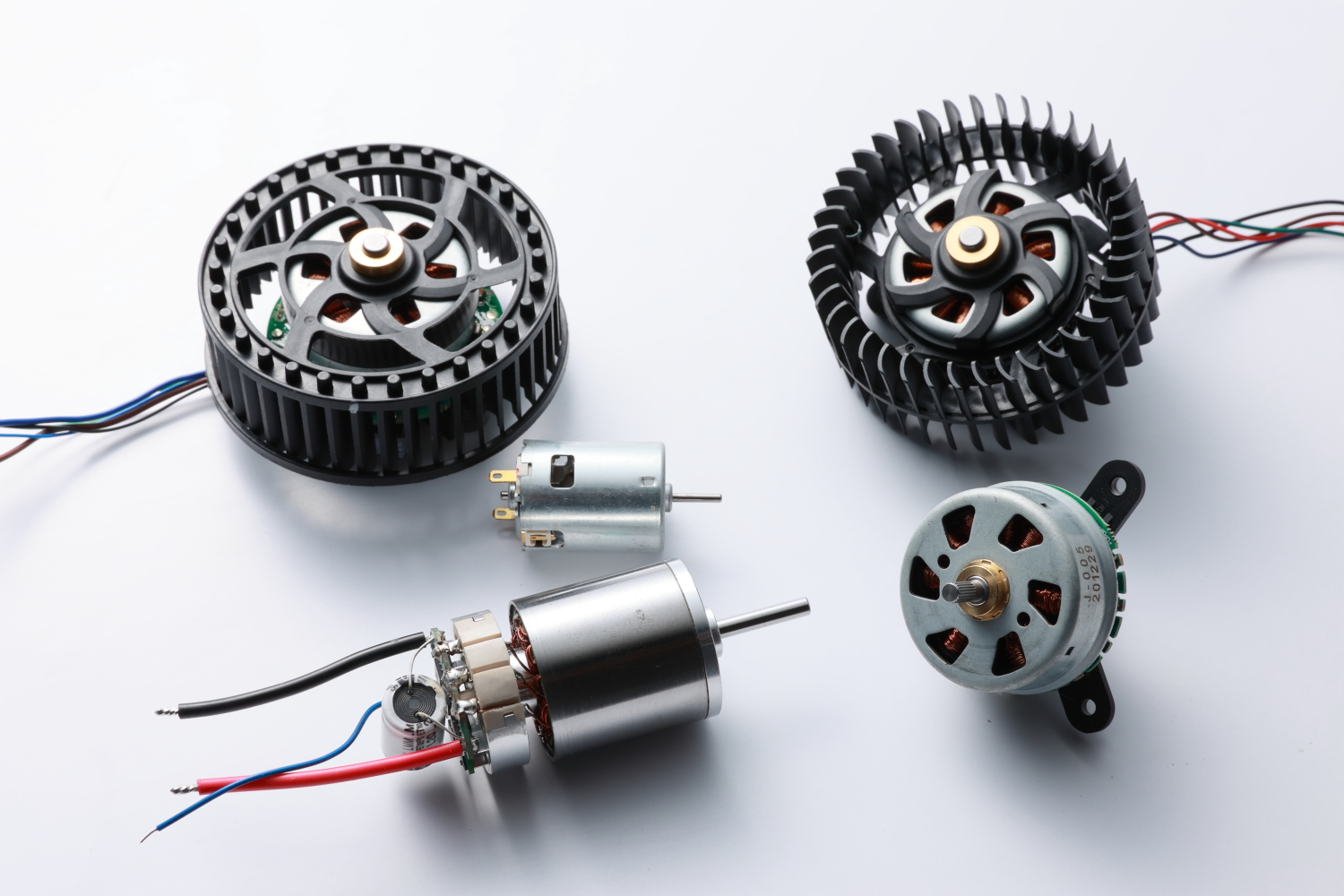
As demand for high efficiency, low noise, and long service life continues to grow across home appliances, industrial equipment, medical devices, and automotive markets, motor technology has continued to evolve. Brushless DC motors (BLDC) have gradually replaced traditional brushed motors and become the mainstream choice in modern equipment.
This article explains the differences between brushless and brushed motors from the perspectives of operating principles, technical characteristics, and real-world applications, and explores why brushless motors are rapidly being adopted across various industries.
This article explains the differences between brushless and brushed motors from the perspectives of operating principles, technical characteristics, and real-world applications, and explores why brushless motors are rapidly being adopted across various industries.
What Is a Brushed DC Motor?
A brushed DC motor is a motor type with a relatively simple structure and a long history of use. It operates through mechanical commutation using carbon brushes in contact with a commutator. Due to its lower cost and straightforward control method, brushed motors were widely used in early home appliances and power tools.
Common Limitations of Brushed Motors
・Carbon brushes wear over time and require regular replacement
・High-speed operation often generates noticeable noise and vibration
・Sparking and carbon dust may occur, affecting operational stability
・Shorter service life, making them unsuitable for long-term continuous operation
・High-speed operation often generates noticeable noise and vibration
・Sparking and carbon dust may occur, affecting operational stability
・Shorter service life, making them unsuitable for long-term continuous operation
Operating Principles and Design Features of Brushless Motors
The key design feature of a brushless motor is the elimination of carbon brushes. Electronic controllers are used for commutation, allowing the motor to operate with virtually no physical contact or mechanical wear, significantly improving efficiency and reliability.
A typical brushless motor consists of a permanent magnet rotor, a wound stator, and an electronic controller responsible for current switching, enabling precise output control based on load requirements.
Comparison Between Brushed and Brushless Motors
| Comparison Item | Brushed Motor | Brushless Motor |
|---|---|---|
| Commutation Method | Mechanical contact via carbon brushes | Electronic commutation |
| Wear Condition | Brushes subject to wear | Virtually no wear |
| Service Life | Shorter | Longer, with higher stability |
| Noise Performance | Relatively high | Quiet and smooth operation |
Applications of Brushless Motors
With the advancement of control technologies and increasing market demand, brushless motors are now widely used in a variety of equipment and have become core driving components for high-efficiency and high-reliability products.
Industrial Equipment and Automation:
・Precision motion control
・Long-term continuous operation
・Reduced equipment maintenance costs
・Long-term continuous operation
・Reduced equipment maintenance costs
Home Appliances and Consumer Products:
・Air conditioners, fans, and vacuum cleaners
・Water pumps and air pumps
・Emphasis on energy efficiency and low-noise design
・Water pumps and air pumps
・Emphasis on energy efficiency and low-noise design
Medical Devices:
・High reliability requirements
・Low noise and stable output
・Designed for long-term operation
・Low noise and stable output
・Designed for long-term operation
Automotive Systems:
・Electric power steering systems (EPS)
・Window regulators, seat and lift modules
・Improved driving comfort and control precision
・Window regulators, seat and lift modules
・Improved driving comfort and control precision
Robotics and Smart Devices:
・High-precision positioning
・Long service life and high-efficiency operation
・Long service life and high-efficiency operation
Conclusion
Brushless motors are not merely a replacement for brushed motors; they are a key technology that significantly enhances product efficiency, quiet operation, and overall reliability.
As market requirements continue to evolve, brushless motors are steadily becoming a critical core component across a wide range of equipment.
As market requirements continue to evolve, brushless motors are steadily becoming a critical core component across a wide range of equipment.
Further Reading: What Is a Brushless Motor? A Simple Comic Guide for First-Time Learners 
Need more replacement model options or customized motor solutions?
Provide your application details, size limitations, required output torque/gear ratio, and annual production volume. Our team will assess the optimal design configuration and project schedule for your needs.
